Timing the Markets: Integrating Live Surebets Scanners with Betting Calculators for Dynamic Arbitrage in Evolving Sports Events
Written by Leon Butler · May 16, 2026
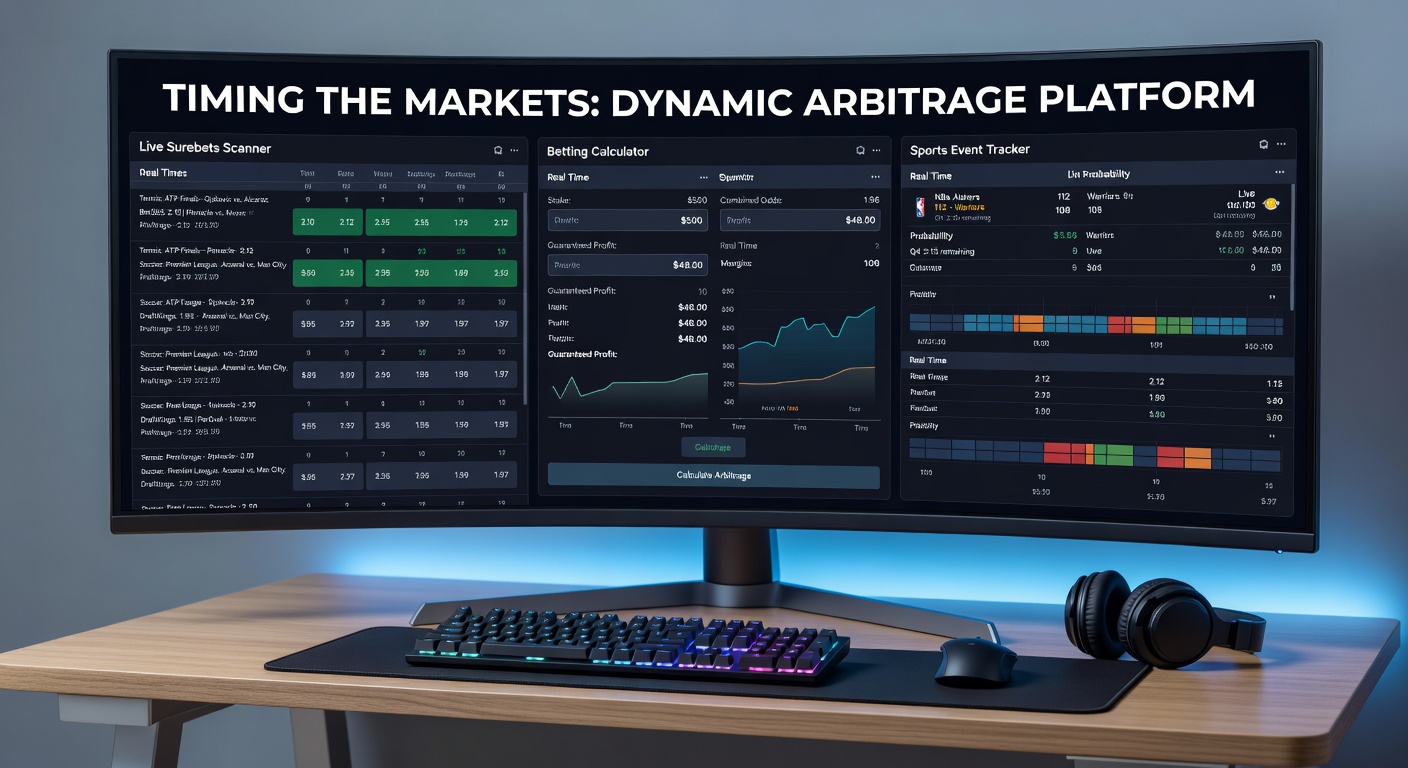
Scanners pull live data from dozens of betting platforms at once, flagging opportunities where odds create guaranteed returns regardless of outcome. Calculators then handle stake allocation across those mismatched lines, locking in the margin before prices move again. Observers note this pairing has grown more precise as live events unfold in May 2026, with football leagues and tennis tours producing rapid odds shifts that reward quick integration of both tools.Core Mechanics of Live Surebets Scanners
Live scanners monitor bookmaker feeds continuously, identifying discrepancies in real time rather than waiting for pre-match markets to settle. They track evolving sports events such as in-play football matches or tennis sets where injuries, weather, or momentum changes trigger immediate price adjustments. Data from industry sources shows these tools aggregate odds from European and North American operators simultaneously, surfacing arbitrage windows that last seconds to minutes. Those who deploy scanners report they filter noise by focusing on high-liquidity markets first, then expanding to niche props only after confirming the core spread.
Functions of Betting Calculators in Stake Management
Calculators convert scanner alerts into exact stake amounts that balance exposure across opposing outcomes. They factor in each bookmaker's maximum limits, commission rates, and current bankroll constraints before generating the precise figures needed to secure the edge. Research from the Australian Gambling Research Centre indicates calculators reduce human error in stake placement by automating formulas that once required manual spreadsheets. Users adjust inputs for currency fluctuations or partial cash-outs, and the software recalculates instantly to maintain the profit margin even as one leg of the bet moves.
Integration Workflow During Evolving Events
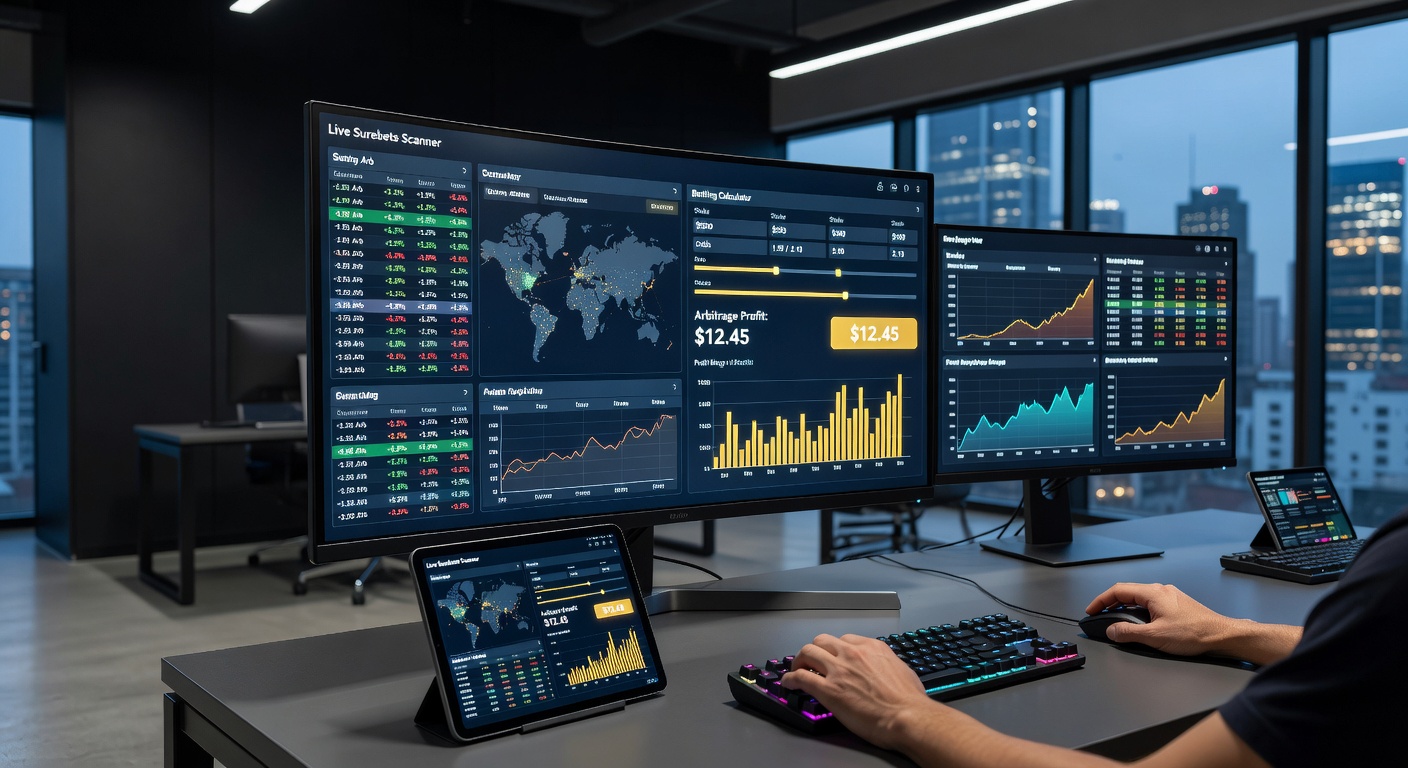
The process starts when a scanner detects a live discrepancy, for example during a May 2026 Champions League knockout where a red card shifts the draw probability. The tool pushes the matched odds pair to a connected calculator, which outputs stakes within a single screen. Traders confirm the positions across accounts before refreshing the scanner for any follow-on drifts. This loop repeats throughout the match, allowing positions to scale or close as new data arrives. European Gaming and Betting Association figures reveal that integrated systems now handle multiple overlapping events without manual switching between separate applications.
Real-World Application in May 2026 Markets
During the ongoing 2026 European football campaign, scanners flagged repeated arbitrage in live over/under goals markets after halftime adjustments. Calculators then distributed stakes across three or four platforms to capture the edge before bookmakers aligned their lines. Similar patterns emerged in tennis, where a scanner spotted a service-break probability swing in a clay-court final, and the calculator produced stakes that accounted for both the current set score and remaining match length. Observers point out that operators in Asia-Pacific regions introduced additional live markets this spring, increasing the frequency of scanner alerts and requiring calculators to process larger data volumes without lag.
Technical Considerations for Reliable Performance
Connectivity speed and API access determine how quickly scanners refresh and calculators execute. Platforms that support direct data feeds from multiple jurisdictions minimize delays compared with web-scraping methods that risk blocks. Security protocols protect account credentials while allowing simultaneous logins, and many users maintain separate profiles per region to stay within individual operator rules. Studies from the International Center for Gaming Regulation highlight that systems combining both tools achieve higher completion rates when users pre-configure alert thresholds and stake limits in advance.
Conclusion
Integration of live surebets scanners with betting calculators creates a closed loop for capturing arbitrage as events develop. The scanner supplies fresh discrepancies while the calculator delivers executable numbers, together enabling traders to respond to May 2026 market movements across football, tennis, and other sports. Continued refinement of data feeds and calculation speed will likely sustain this approach as more operators expand live offerings.