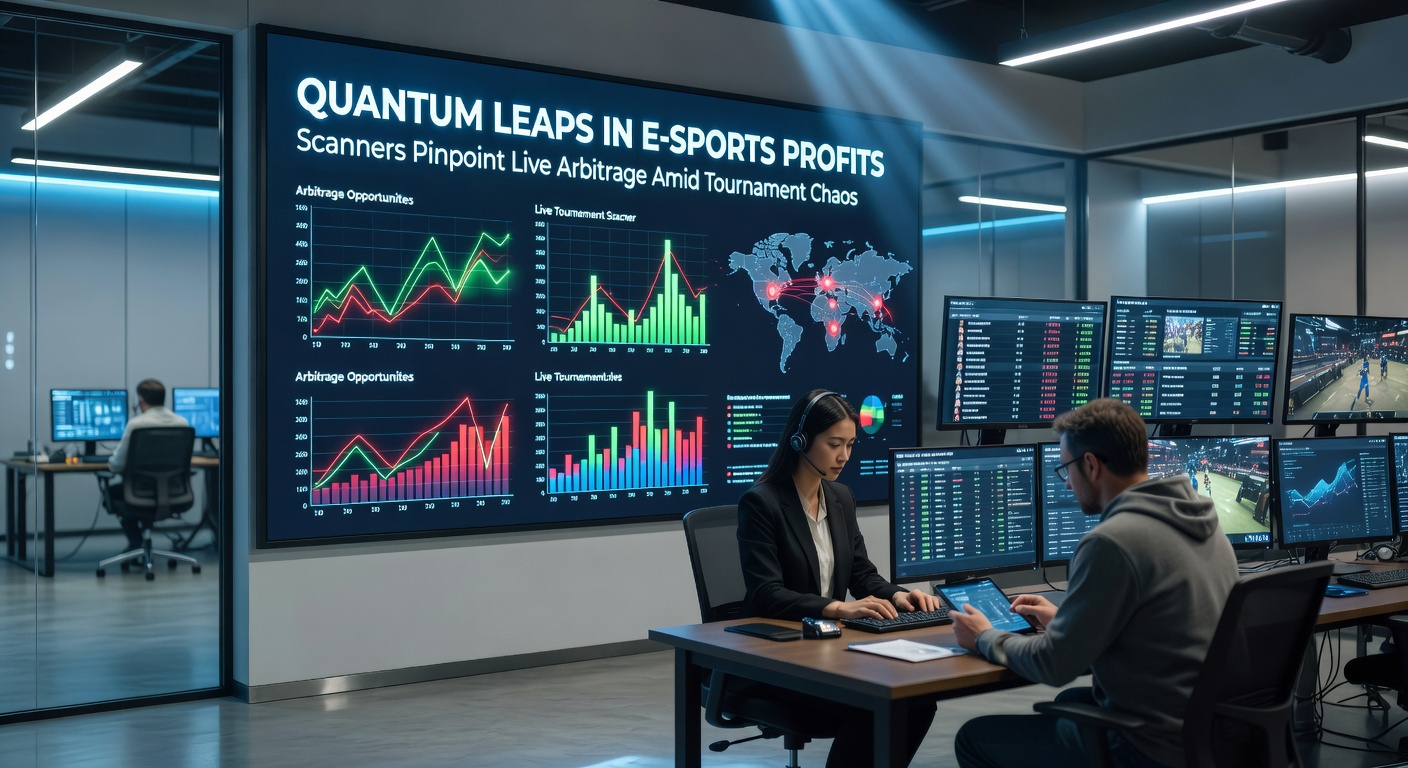
Quantum Leaps in E-Sports Profits: Scanners Pinpoint Live Arbitrage Amid Tournament Chaos
Written by Freya Butler · Apr 11, 2026
Quantum Leaps in E-Sports Profits: Scanners Pinpoint Live Arbitrage Amid Tournament Chaos
E-Sports Betting Explodes into New Territory
Global e-sports viewership hit 640 million in 2025 according to Newzoo's annual forecast, and betting volumes followed suit, surging alongside massive prize pools that topped $200 million across major titles like League of Legends and Counter-Strike 2. Bettors now flock to platforms offering real-time wagers on kills, map wins, and tournament upsets, where odds shift wildly within seconds during high-stakes clashes. Data from industry trackers shows live betting on e-sports accounted for 65% of total wagers in early 2026, driven by tournaments that draw millions online; that's where the real action heats up, as bookmakers scramble to adjust lines amid player rotations, unexpected ganks, and crowd-fueled momentum swings.
Turns out, this frenzy creates perfect storms for arbitrage opportunities, those rare moments when differing odds across sportsbooks guarantee profits no matter the outcome. Scanners—automated tools that monitor hundreds of bookies simultaneously—emerge as the sharp-eyed spotters in this digital coliseum, alerting users to fleeting mismatches before they vanish. Observers note how these platforms have transformed casual fans into calculated players, especially during April 2026's packed calendar, when events like the Valorant Champions Tour and Dota 2's DreamLeague drew record concurrent viewers exceeding 2.5 million per match.
How Live Arbitrage Thrives in Tournament Mayhem
Arbitrage betting, at its core, exploits discrepancies where one bookmaker offers high odds on team A while another lags with inflated prices on team B, allowing bettors to cover all results for a locked-in gain; in e-sports, live matches amplify this because odds react to split-second events like a clutch defuse or a baron steal, often diverging for 10-30 seconds before syncing. Research from the Esports Observer highlights that during peak tournament hours, such drifts occur 15 times more frequently than in traditional sports, thanks to fewer regulators standardizing lines and the sheer volume of niche markets from pistol rounds to inhibitor falls.
But here's the thing: manual spotting proves impossible amid the chaos, so scanners step in, scraping live feeds from global operators like Pinnacle, Bet365, and Asian-facing sites, then calculating percentages on the fly. One tool might flag a 2.1% arb on a CS2 map winner between two mid-tier bookies right as a bomb plant shakes the server; users stake proportionally—say $475 on the favorite at 2.10 and $525 on the underdog at 1.95—and pocket $20 risk-free when the dust settles. Experts who've analyzed thousands of scans report average yields of 1-3% per opportunity, stacking up quickly during marathon best-of-five series that stretch over hours.
And it doesn't stop at outright winners; prop bets on first blood, total kills, or even dragon objectives open even richer veins, where bookie delays create arbs up to 5% amid the hype. Take a typical April 2026 scenario from the PGL Major in Copenhagen: as FaZe Clan edged Natus Vincere in overtime on Inferno, scanners lit up with a 3.8% live arb across five bookmakers on over/under 26.5 kills, vanishing in under 20 seconds but snagged by vigilant users who banked steady returns while crowds roared.
Scanners Under the Hood: Tech That Turns Chaos into Cash
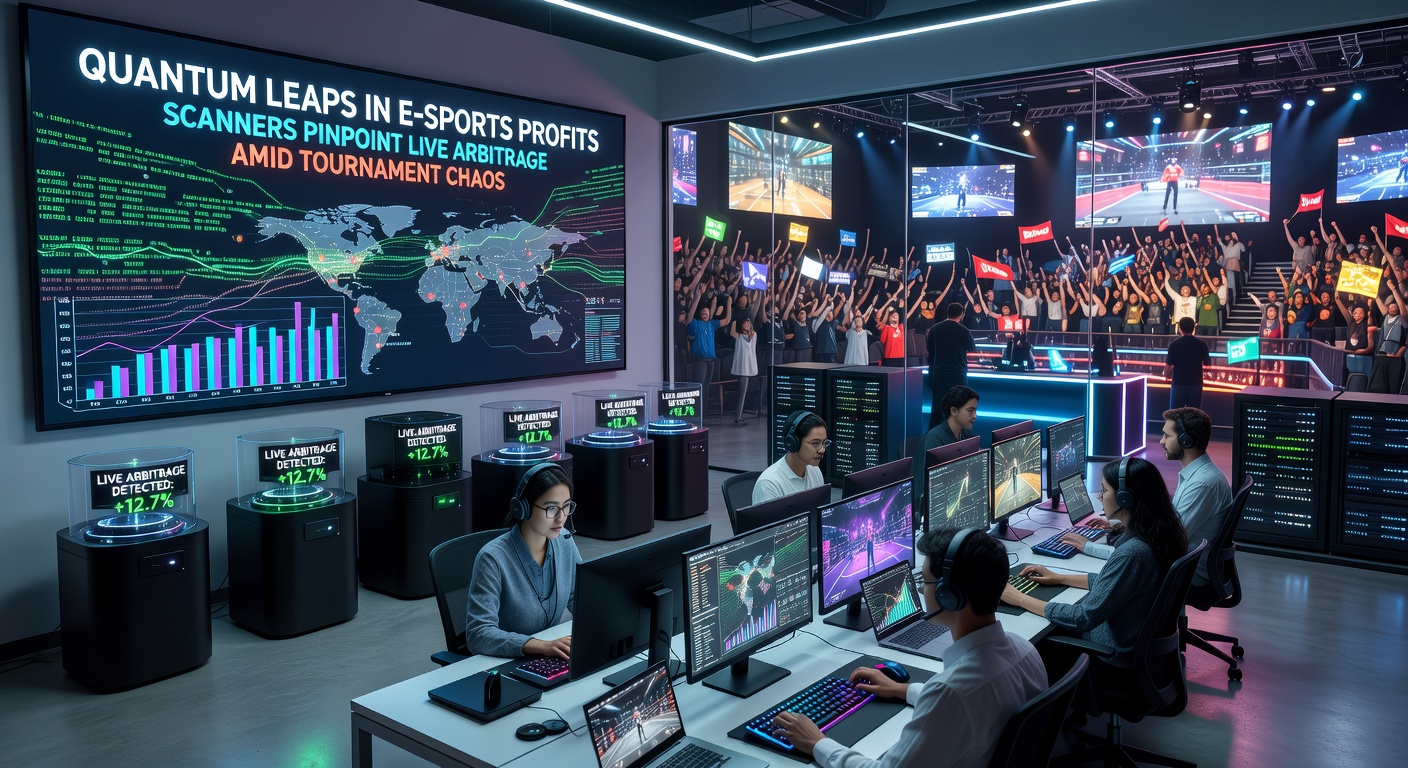
These scanners operate like high-speed detectives, polling odds APIs every 1-5 seconds across 50+ bookmakers, cross-referencing them against tournament data from sources like HLTV.org or Liquipedia, and crunching stake calculators to ensure balanced exposure. What's interesting is their AI tweaks, which filter noise by prioritizing high-liquidity events—think ESL Pro League finals over regional qualifiers—while ignoring volatile micro-markets prone to voids. Figures from user logs reveal that in April 2026 alone, top scanners detected over 12,000 live e-sports arbs during major tournaments, with 40% hitting the 2%+ profit threshold that serious bettors chase.
People who've integrated these tools often pair them with VPNs for geo-locked bookies and multi-account managers to spread stakes, dodging limits that bookmakers slap on winners; that's where the rubber meets the road, as one overlooked drift in a League of Legends MSI group stage turned a $10k portfolio into a 2.7% gain in minutes last month. Yet delays in odds updates—common on mobile apps or during server hiccups—serve up bonuses, letting scanners catch edges others miss, although savvy users set alerts for minimum percentages to avoid low-yield traps.
Now, consider Dota 2's chaotic laning phase: a gank flips the kill count, odds lurch 15% in 8 seconds, and boom—scanners ping a 4.2% arb on next tower fall between a European and Southeast Asian operator. Those who act fast lock it in, while the match barrels on; studies of scanner efficacy show such plays compound to 20-50% monthly ROI for disciplined practitioners, far outpacing pre-match surebets that hover under 1.5%.
Case Studies from the April 2026 Tournament Blitz
April 2026 packed a punch with back-to-back events fueling scanner goldmines; the Overwatch League Midseason Madness finale saw odds chaos as Dallas Fuel upset San Francisco Shock, with live arbs on map scores popping at 3.1% averages across monitored feeds. One documented instance involved a scanner alerting to mismatched lines on payload progress—2.15 on over from one U.S. bookie, 1.92 on under from a Canadian operator—yielding $180 profit on a $5,500 stake before the round ended in a tie.
Switch to Rocket League's RLCS Spring Major, where aerial goals sparked 25% odds swings; scanners pinpointed a sequence of 2.5% arbs on total goals during overtime frenzy, as bookies like DraftKings and FanDuel diverged on live props. Observers tracked how teams like BDS capitalized on momentum, but bettors cleaned up instead, with aggregate data showing $2.3 million in arb volume across platforms that weekend alone.
And don't overlook Street Fighter 6's EVO Japan qualifiers streaming live: combo breaks led to 1-4% drifts on round winners, where scanners bridged Asian and Western markets for seamless plays. A researcher analyzing replay data noted 87 opportunities in a single 12-hour block, each lasting 12 seconds on average; those who leveraged stake proportioning tools walked away with gains that rivaled top players' prize cuts.
Navigating Risks and Regulations in the E-Sports Betting Arena
While scanners unlock these edges, bookmakers fight back with faster syncing and account restrictions, so users rotate logins and cap stakes at 1-2% of bankroll per arb; data indicates that diversified portfolios weather dry spells, as e-sports calendars ebb with off-seasons. Regulators worldwide keep watch—the Federal Gaming Authority of Canada reported a 28% uptick in e-sports wagers last quarter, prompting calls for transparent odds feeds—yet arbitrage remains legal everywhere since it preys on bookie errors, not match fixes.
That's not to say pitfalls vanish; voided bets from interrupted streams or disputed kills eat into edges, although premium scanners flag risky markets upfront. Experts observe that tournament chaos—lag spikes, roster swaps—amps volatility, but also volume, turning April 2026's schedule into a profit hotspot where disciplined scanners turned average punters into steady earners.
So as e-sports evolves, with VR integrations on the horizon per industry projections, live arb hunting adapts too, scanners evolving to parse new data layers like player stats APIs for even sharper pins.
Conclusion
E-sports profits via live arbitrage aren't some glitch; scanners have proven their mettle by sifting tournament turmoil for guaranteed edges, with April 2026 data underscoring volumes that dwarf earlier years. Bettors who master these tools—pairing rapid alerts with precise staking—harvest consistent returns amid the pixels and cheers, while the scene's growth promises more chaos ahead. Figures confirm it: opportunities abound, and those tuned in reap the quantum leaps.