Over/Under Totals Precision: Scanners Tracking Worldwide Line Variations to Optimize Multi-Bookie Returns
Written by Freya Butler · Jul 13, 2026
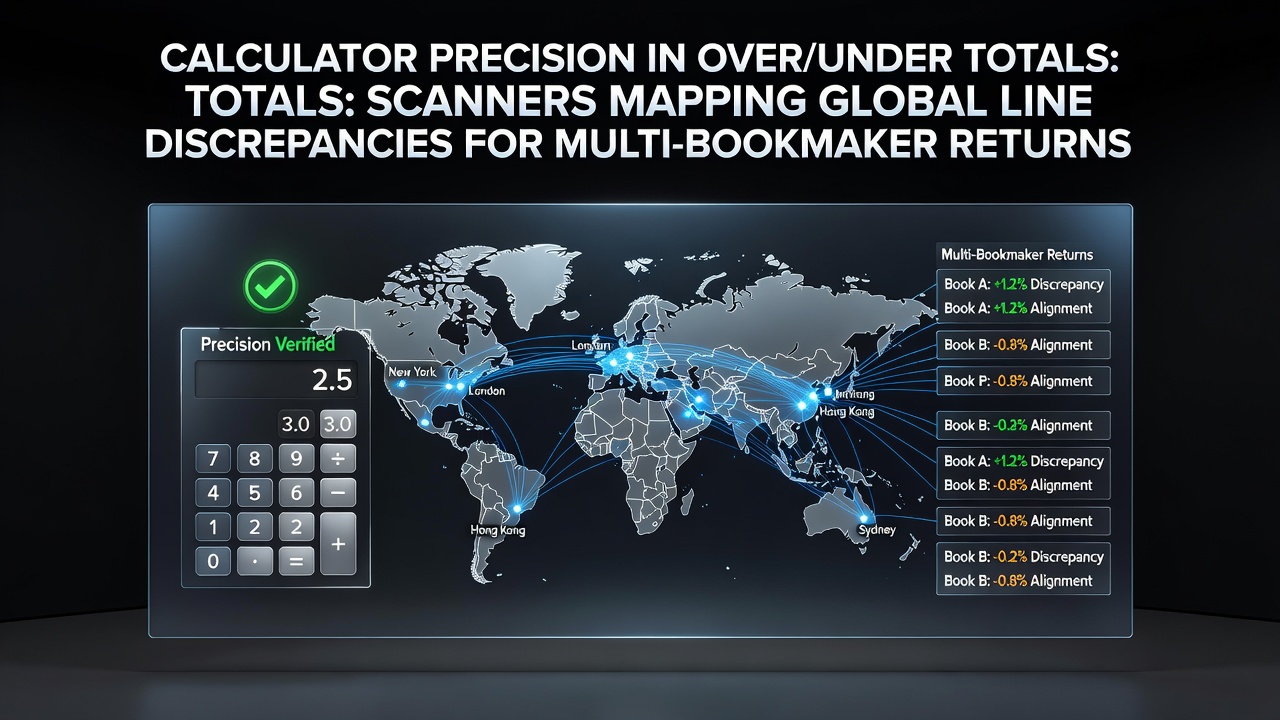
Over/Under Totals Precision: Scanners Tracking Worldwide Line Variations to Optimize Multi-Bookie Returns
Scanners operate around the clock to compare over/under totals across dozens of licensed operators, and they flag differences that arise from varying risk models, regional preferences, and real-time data feeds. Observers note that even a half-goal shift in a soccer total or a point spread adjustment in basketball can create measurable edges when stake calculators apply exact formulas to balance wagers on opposing sides at separate books. Data from multiple jurisdictions shows these discrepancies occur most frequently during early-week line releases and again after significant player news or weather updates.
Mechanics of Line Mapping
Automated systems pull totals from European, Asian, North American, and Australian platforms simultaneously, then sort the figures by sport, league, and market depth. Researchers at several analytics firms have documented that Asian books often post totals 0.25 to 0.75 points lower than their North American counterparts on the same basketball games, while European operators sometimes lean higher on soccer over/unders during domestic cup matches. The scanners record these spreads in real time and push alerts when the gap exceeds a preset threshold that calculators confirm can yield positive expected value after commission adjustments.
Stake calculators incorporate current vig rates, rounding rules, and payout structures from each operator to determine the precise amounts required on both sides of a discrepancy. Those who've examined large sample sets find that rounding to the nearest cent or applying different decimal formats can shift the final margin by several basis points, enough to turn a marginal position into a guaranteed return when multiple books participate.
Precision Requirements in July 2026
Activity levels rose noticeably in July 2026 as major summer tournaments overlapped with North American baseball and European friendlies, producing higher volumes of over/under markets. Reports from the Nevada Gaming Control Board indicated increased handle on totals during that period, while parallel figures released by the Australian Communications and Media Authority showed similar spikes in rugby league and cricket markets. Scanners captured wider spreads during these weeks because operators adjusted limits independently in response to local betting patterns and hedging needs.
Calculators now factor in dynamic limits and settlement delays that appear more often when multiple time zones are involved. One documented workflow involves a scanner identifying a 2.5-goal soccer total listed at 1.92 on one platform and 1.88 on another, after which the calculator outputs stakes that lock in a return regardless of whether the match finishes over or under the line.
Multi-Bookmaker Execution Flow
Traders receive alerts that list the exact books, the differing totals, and the recommended stake split calculated to the cent. Execution proceeds through API connections or manual entry at each site, with timing windows typically measured in seconds before lines converge. Evidence from industry monitoring groups shows that operators who refresh totals less frequently create longer windows for these plays, whereas high-frequency books tighten spreads within minutes of each other.
Additional layers include currency conversion rates and withdrawal processing times that calculators integrate when returns must clear across borders. Those monitoring performance across regions report that platforms operating under the Malta Gaming Authority framework and certain Canadian provincial regulators maintain distinct total-setting protocols that scanners continue to exploit during overlapping seasons.
Verification and Adjustment Protocols
Continuous back-testing against historical closing lines helps refine scanner thresholds, while calculator models receive updates whenever payout structures or tax treatments change in any jurisdiction. Figures released by the International Betting Integrity Association in mid-2026 highlighted the growing share of totals markets in overall arbitrage volume, particularly in leagues where player availability fluctuates rapidly. Observers note that precision tools reduce exposure to settlement disputes because they account for specific league rules on overtime or extra time before generating stake recommendations.
Cross-checks between scanner feeds and official results feed into ongoing model calibration, ensuring that small discrepancies in published totals do not propagate into incorrect stake outputs. This feedback loop runs daily and incorporates data from multiple continents to maintain accuracy as new operators enter the market.
Conclusion
Scanner networks combined with high-precision calculators now form the core infrastructure for identifying and capturing returns from over/under line differences across global bookmakers. The process relies on continuous data collection, exact mathematical balancing, and rapid execution windows that have expanded with the number of regulated platforms. As market volumes and regulatory frameworks evolve, the same tools continue to map variations and support consistent multi-bookmaker positioning in totals betting.