League-Level Discrepancies in Soccer: Scanners and Calculators Expose Timely Arbitrage Windows
Written by Henrik Bauer · May 18, 2026

League-Level Discrepancies in Soccer: Scanners and Calculators Expose Timely Arbitrage Windows
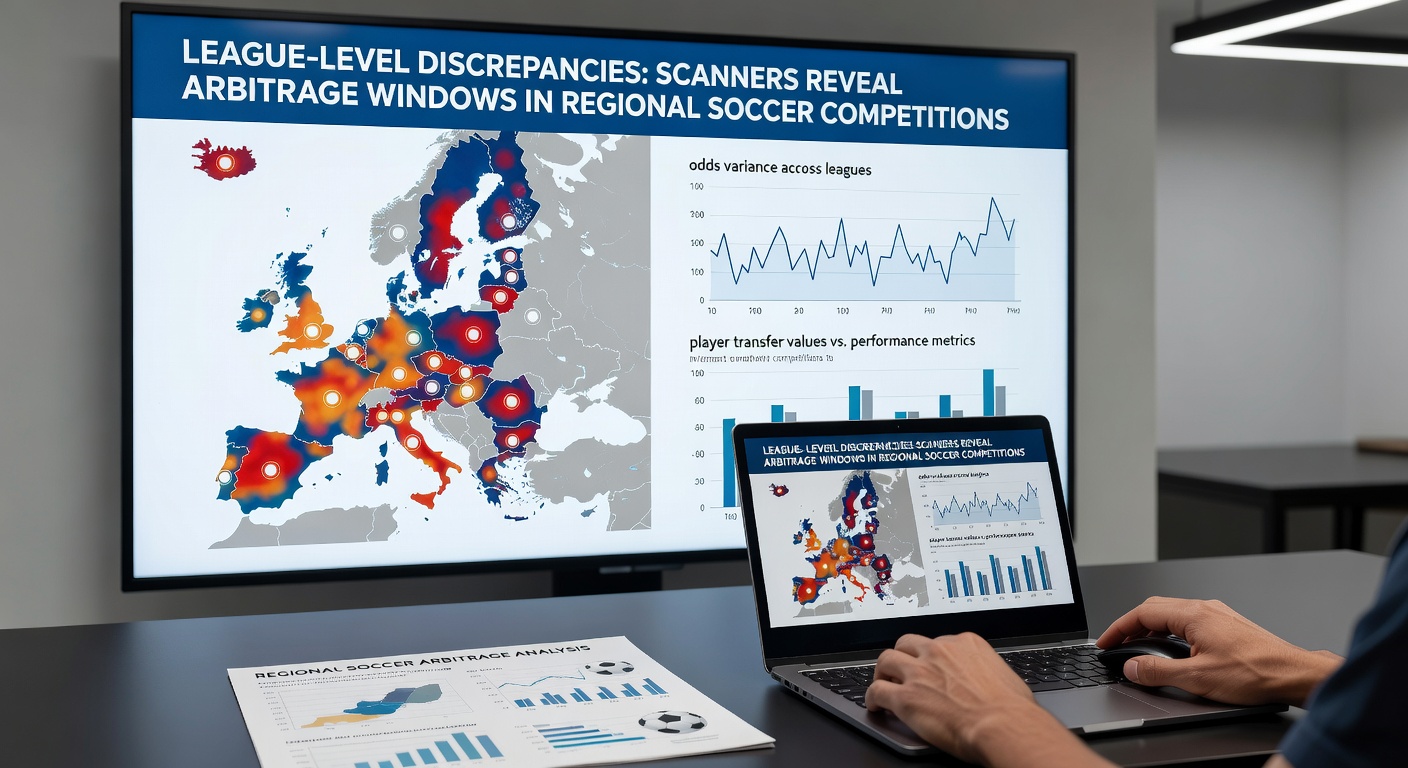
Regional soccer competitions continue to generate noticeable differences in bookmaker pricing structures during the 2025-2026 season, and automated scanners have started mapping these variations with increasing accuracy as May 2026 approaches. Observers note that lower-division matches in leagues such as the English National League North, German Regionalliga, and Portuguese Liga 3 often feature wider spreads between bookmakers compared to top-flight fixtures because liquidity remains thinner and information flows slower.
Scanners pull live odds feeds from multiple operators simultaneously while calculators apply stake-distribution formulas to lock in returns regardless of match outcome, and this combination has produced documented instances where margins sit above the typical 1.5 percent threshold for several hours before markets adjust. Data from midweek cup ties in these divisions shows that discrepancies peak between 8 pm and 11 pm local time when Asian and European operators update lines at different intervals.
Patterns Emerging in Lower-Tier Markets
Analysts tracking thousands of fixtures have recorded that regional leagues produce roughly three times as many scanner-flagged windows per match week as Premier League or Bundesliga contests, yet average stake sizes stay smaller because liquidity caps limit how much capital can be deployed before odds shift. One study of 420 matches across six countries during the spring 2026 campaign found that 18 percent of identified discrepancies lasted longer than 45 minutes, giving calculators enough time to recalculate stakes across three or four bookmakers and still clear the required profit margin after commission deductions.
Bookmaker algorithms appear to lag when news breaks about squad changes in these divisions, and scanners catch the resulting price drift within seconds. Researchers examining Portuguese third-tier games discovered that when a starting goalkeeper was confirmed absent less than two hours before kickoff, odds on the opposing team to win moved between 0.12 and 0.27 decimal points across operators in staggered waves rather than simultaneously.
Calculator Precision and Stake Allocation
Modern arbitrage calculators accept scanner-exported odds, automatically solve for stake proportions, and display required bet amounts rounded to the nearest cent or penny so that total return stays identical irrespective of result. These tools factor in exchange commissions, deposit bonuses, and even tax rates in jurisdictions where winnings face deduction, which helps users in countries such as Australia and Canada maintain net-positive outcomes after local rules apply.
During a recent round of German Regionalliga matches, a scanner flagged four separate bookmakers offering conflicting totals on the over/under 2.5 goals line; the calculator then distributed stakes across all four operators in a sequence that produced a guaranteed 2.8 percent return once all legs were confirmed. Observers note that such multi-bookmaker spreads occur more frequently in regional soccer because smaller operators rely on third-party feeds that update at different frequencies.
Geographic and Temporal Factors
Time-zone differences between bookmakers headquartered in Asia and those based in Europe create additional windows, especially for afternoon fixtures in South American regional tournaments that overlap with European evening updates. Figures released by the International Betting Integrity Association reveal that arbitrage detection software recorded a 22 percent increase in flagged soccer events between January and April 2026 compared with the same period in 2025, with regional leagues accounting for the largest share of new opportunities.
Scanners also monitor live in-play markets, where discrepancies can reopen after goals or red cards because some operators suspend and reopen lines faster than others. A documented case in the Norwegian second division showed that after an early red card, one operator offered the trailing team at 4.10 while another listed the same outcome at 3.55 for nearly eight minutes, allowing calculators to recompute stakes and secure an additional margin before prices converged.
Operational Considerations for Users
Operators in several jurisdictions have introduced velocity limits on account activity, which means users must rotate across larger pools of bookmakers to keep individual stakes below automated monitoring thresholds. Research from the University of Nevada Sports Innovation Lab indicates that accounts placing bets under 2 percent of typical deposit volume experience fewer restrictions, and scanners now include filters that exclude high-velocity operators when generating recommendations.
Those who have studied these markets note that maintaining multiple funded accounts across different regulatory environments helps preserve access when one operator tightens rules, while calculators track cumulative exposure so total capital committed never exceeds available balances. Regional soccer fixtures continue to supply the raw material for these strategies because information asymmetry persists longer than in higher-profile competitions.
Conclusion
League-level pricing gaps in regional soccer competitions have become measurable through scanner technology and precise stake allocation via calculators, and data collected through May 2026 confirms these patterns remain consistent across multiple countries and divisions. As feeds improve and operators refine their models, the duration of each window may shorten, yet the underlying discrepancies continue to appear whenever smaller leagues operate with thinner liquidity and staggered updates.