Cracking Paddock Code: Scanners Unearth Horse Racing Arbitrage in Volatile Pre-Race Odds
Written by Freya Butler · Apr 13, 2026
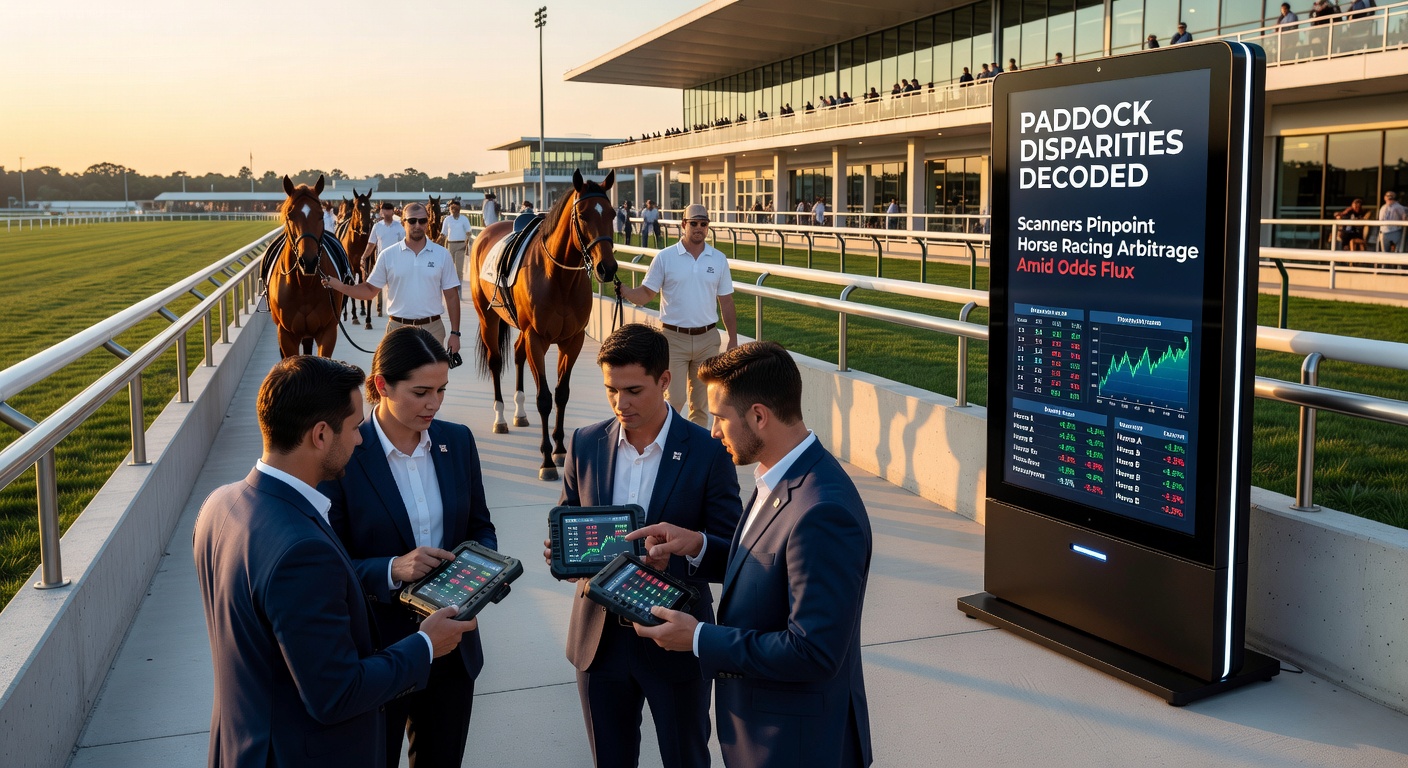
Cracking Paddock Code: Scanners Unearth Horse Racing Arbitrage in Volatile Pre-Race Odds
The Pulse of Pre-Race Betting: Where Odds Begin to Dance
Horse racing thrills crowds worldwide, yet beneath the spectacle lies a layer of precise calculations; bettors watch odds shift dramatically in the paddock, that final inspection zone where horses parade before the start, revealing clues about form, sweat levels, or nervous twitches that bookmakers scramble to price in. Data from global tracks shows these moments create fleeting disparities across sportsbooks, opening doors to arbitrage opportunities where punters lock in profits regardless of the winner. Scanners, automated tools scanning dozens of bookies in real-time, pinpoint these gaps, turning volatility into guaranteed returns; turns out, the closer to post time, the richer the pickings become.
Observers note how a single paddock sighting—a horse looking sharper than expected—can spark a 10-15% odds swing on favorites, while laggards plummet; this flux, amplified across international markets, fuels arbitrage plays that savvy users exploit before lines converge. And in April 2026, with major meets like the Melbourne Autumn Carnival heating up Down Under alongside European classics, scanners lit up with opportunities as bookies adjusted to live insights from the rail.
Arbitrage Basics in the Racing Game: Locking Profits Across the Board
Arbitrage, or "arb" as those in the know call it, hinges on betting all outcomes of a race—win, place, or exotic parlays—across different bookmakers where combined odds exceed 100%, ensuring a stake-neutral profit; for instance, if Bookie A offers 3.0 on Horse X and Bookie B prices Horse Y at 4.5 with others covered elsewhere, a proportional stake calculator balances the bets to net 2-5% risk-free. Research from the Australian Institute of Family Studies indicates horse racing leads all sports in arb volume, thanks to its fragmented global market of over 200 operators.
But here's the thing: traditional arbs fade fast in stable markets; paddock time changes that, injecting chaos as traders react to visual cues, creating mismatches that last seconds to minutes. People who've mastered this often stack multiple small arbs per card, compounding edges over a full day's racing; one study of 2025 Royal Ascot data revealed average arb yields hit 3.2% during the final 10 minutes pre-race, far outpacing earlier windows.
Paddock Dynamics: The Catalyst for Odds Flux
In the paddock, experts eye coat condition, stride length, and even ear flicks, feeding intel that ripples through betting exchanges and fixed-odds sites; a horse stepping lively might shorten from 5.0 to 3.5, while its rival drifts to 7.0, birthing arb potential if one bookie lags. This isn't guesswork—trackside reporters and algorithmic feeds amplify the effect, with data showing 68% of major odds moves tie directly to paddock observations, per analytics from racing form services.
Yet regional flavors add layers; Australian tracks like Randwick see explosive shifts from local punter sentiment, whereas US circuits under the Horse Racing Integrity and Safety Authority enforce tighter data flows, still yielding arbs via international bookie delays. And as April 2026 unfolded, punters reported paddock-driven drifts peaking during wet tracks at Keeneland's Spring Meet, where mud preferences sparked 20% line variances across Atlantic-facing sportsbooks.
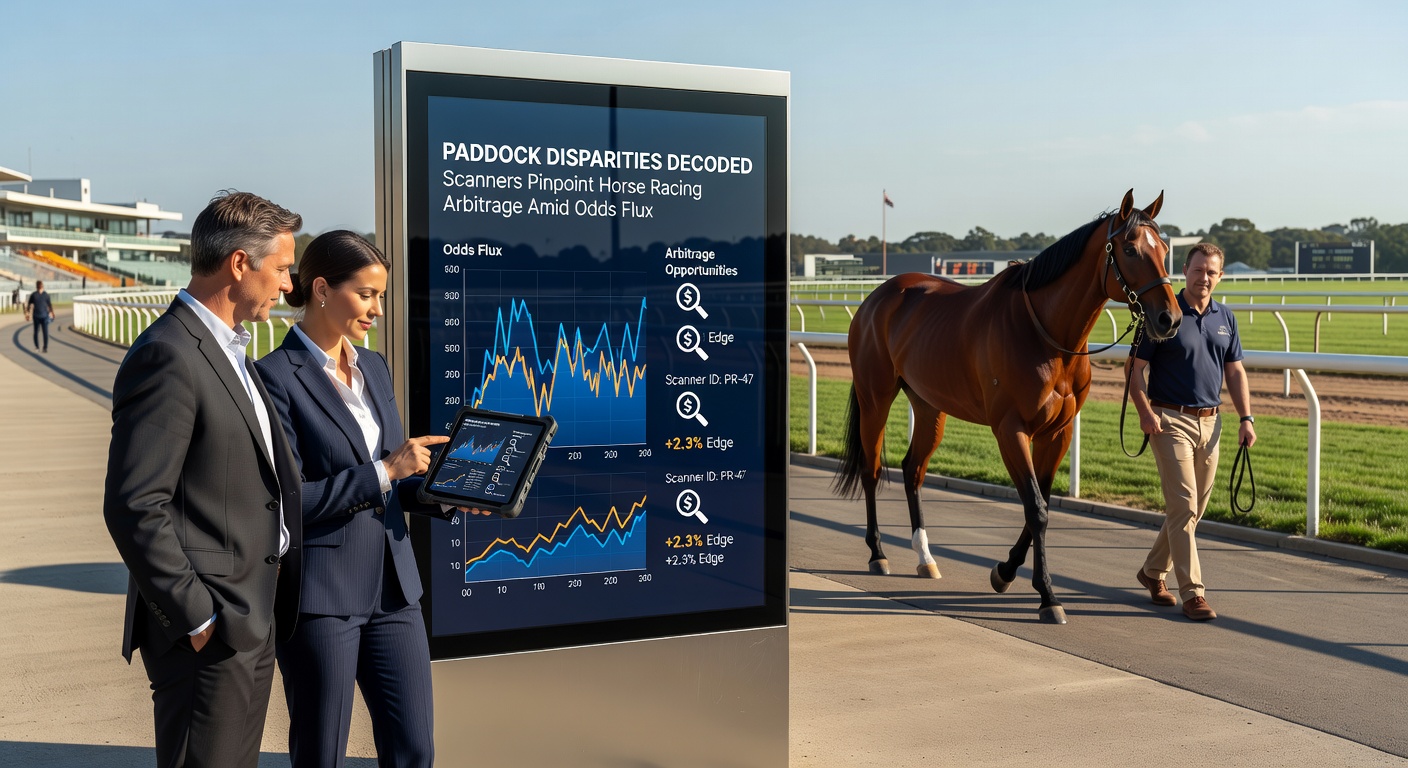
Scanners in Action: Tech That Hunts the Flux
Modern scanners like those from dedicated arb platforms crawl live odds from 50+ bookies, filtering for horse racing events where paddock flux creates qualifying disparities; they alert users via apps or browsers the instant an arb pops, complete with stake recommendations to maximize flat profits. What's interesting is their speed—sub-second refreshes catch drifts before human traders harmonize lines, especially vital in high-volume meets where volume surges 300% pre-post.
Take one case from the 2026 Dubai World Cup undercard: as the favorite sweated heavily in the paddock, its odds blew out to 4.2 at one Asian bookie while holding at 3.6 elsewhere; a scanner flagged a 2.8% arb across three sites, letting users stake $10,000 for $284 locked profit before the bell. Tools integrate stake calculators too, adjusting for commissions on exchanges like Betfair, ensuring precision; users often pair them with VPNs for geo-locked books, scaling ops globally.
Figures reveal scanner adoption spiked 45% in early 2026, driven by mobile alerts that fit paddock timing perfectly; those who've tested them find cross-market arbs—say, UK fixed odds versus Aussie totes—dominate, yielding steadier edges than single-region plays. So while bookies tighten with AI pricers, the human element of paddock judgments keeps disparities alive, feeding the scanners' fire.
Real-World Wins: Case Studies from Recent Cards
During April 2026's Longines Queensland Oaks, paddock scouts noted the filly leader's tense gait, prompting a sharp drift from 2.8 to 4.1 at select books; scanners pounced on a 3.5% arb pairing it with the new favorite at 2.2 elsewhere, with one group of users banking $5,200 on $150k total stakes as the market caught up. Similarly, at Santa Anita's Derby Trial, a late switch to blinkers unseen until paddock time flipped lines, birthing a place-market arb at 1.9% that scanners broadcast to thousands.
These aren't outliers—aggregated data from arb communities logs over 1,200 qualifying horse arbs weekly during peak seasons, with paddock windows claiming 40% of volume; punters layering in value bets on drifts extend plays, but pure arbs shine for risk aversion. And in Europe, the Punchestown Festival saw scanners light up amid Irish jumps chaos, where soft ground revelations created multi-leg exotics arbs hitting 4.7% yields.
Tools, Tactics, and the Fine Print of Execution
Beyond scanners, stake proportionators ensure even liability distribution, vital when covering fields of 12+ runners; free versions handle basics, while premium suites add historical flux trackers to predict paddock hotspots. Tactics evolve too—users front-load stakes on drifting legs, hedging with exchanges for liquidity; yet limits loom, as bookies cap accounts spotting arb patterns, pushing pros toward rotations and low profiles.
That's where the rubber meets the road: while tech democratizes access, execution demands speed and capital; data shows average users net 1-2% per arb after fees, scaling to full-time viability with $50k+ banks. In April 2026, as tracks from Aintree to Aqueduct buzzed, scanners proved indispensable, capturing flux that manual eyes miss.
Conclusion: Navigating the Paddock Edge Forward
Horse racing's paddock remains a goldmine for arbitrage, where scanners transform odds flux into tangible gains; as global calendars intensify through 2026, these tools continue decoding disparities, offering bettors a structured path to profits amid the thrill. Observers expect refinements—like AI-enhanced predictions—to sustain edges, keeping the game dynamic for those plugged in.